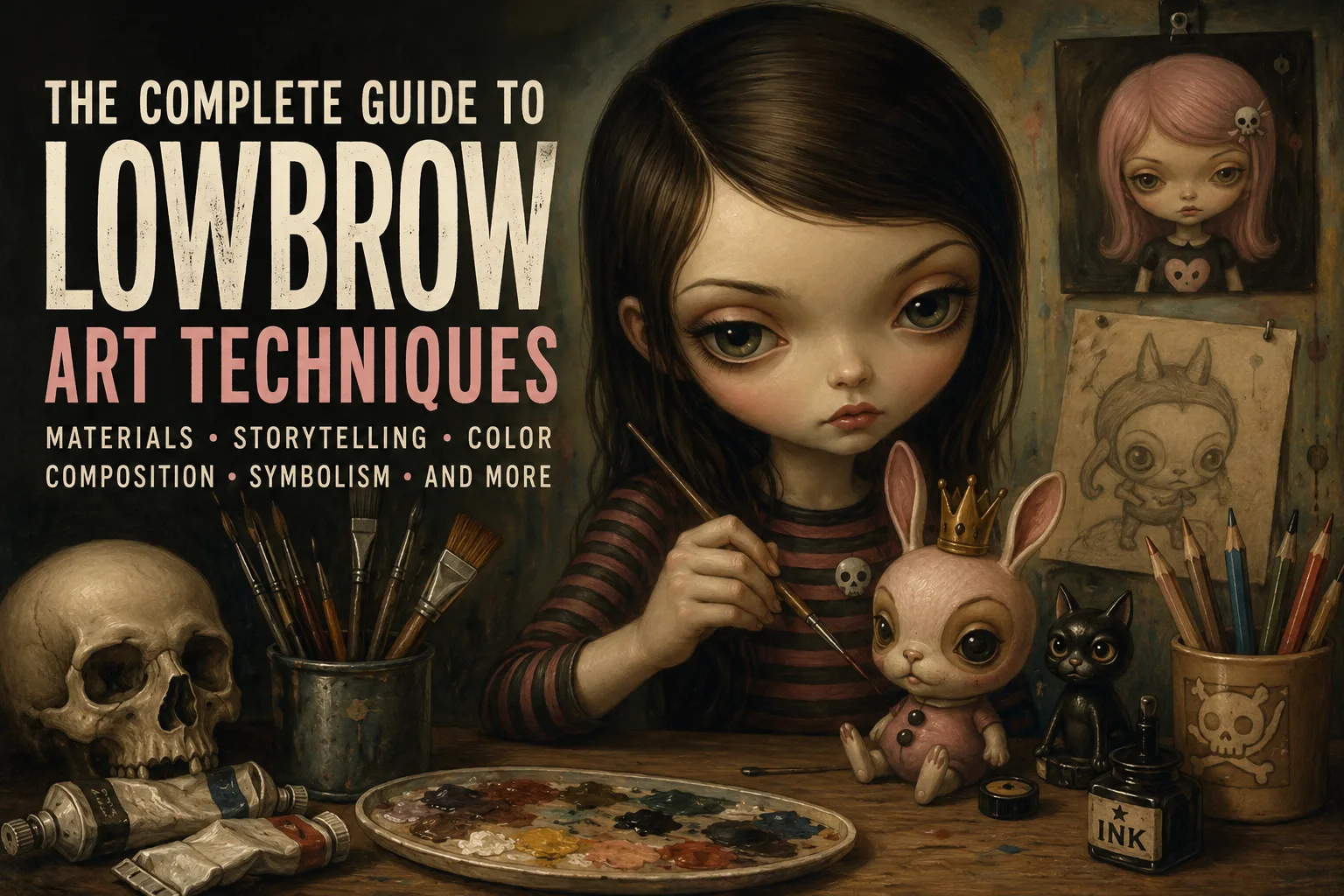
Looking to master lowbrow art techniques? Whether you're inspired by the surreal worlds of Mark Ryden, the underground energy of Robert Williams, or the imaginative storytelling of Todd Schorr, this guide explains the essential techniques that define the Lowbrow (Pop Surrealism) movement.
You'll learn the drawing fundamentals, painting methods, materials, color palettes, and creative exercises that can help you develop your own artistic voice. If you're new to the movement, you may also enjoy our guide to the Best Anatomy Books for Artists, which covers some of the strongest figure-drawing references available today.
Quick Recommendations
Looking for resources before you dive in? These books and studio supplies are excellent starting points.
Advertisement
Affiliate Disclosure: This article contains affiliate links. If you purchase through one of these links, we may earn a small commission at no additional cost to you. Our recommendations are based on research and educational value—not affiliate commissions.
What Is Lowbrow Art?
Lowbrow Art—also known as Pop Surrealism—emerged in Southern California during the late twentieth century. The movement blends classical painting techniques with influences from underground comics, hot rod culture, tattoo art, cartoons, advertising, fantasy illustration, and surreal storytelling.
Although every artist develops a unique style, many share common techniques that can be studied and practiced.
The Core Principles of Lowbrow Art
Successful lowbrow paintings often combine:
- Strong drawing fundamentals
- Narrative storytelling
- Symbolic imagery
- Careful lighting
- Rich color palettes
- Highly rendered surfaces
- Unexpected subject matter
- Emotional atmosphere
Rather than painting something that is merely strange, the goal is to create an image that encourages viewers to keep discovering new details.
Technique 1: Build Strong Drawing Skills
Every accomplished lowbrow artist begins with solid draftsmanship.
Spend time practicing:
- Gesture drawing
- Figure drawing
- Perspective
- Animal anatomy
- Facial expressions
- Composition
A strong understanding of anatomy makes even highly stylized characters feel believable. If you'd like to improve your figure drawing, see our Best Anatomy Books for Artists.
Technique 2: Tell a Story
One of the defining characteristics of lowbrow art is visual storytelling.
Ask yourself:
- Who is this character?
- What happened before this scene?
- What will happen next?
- Why are these objects together?
Great paintings invite curiosity instead of answering every question.
Technique 3: Develop Personal Symbolism
Many artists use recurring symbols that become part of their visual identity.
Common motifs include:
- Rabbits
- Deer
- Toys
- Balloons
- Birds
- Masks
- Religious imagery
- Vintage advertising
- Mechanical objects
The most memorable symbols are the ones that have personal meaning to the artist.
Technique 4: Layer Color Slowly
Instead of applying thick paint immediately, build color gradually through transparent or semi-transparent layers.
This approach creates:
- Richer colors
- Better depth
- More convincing skin tones
- Softer transitions
The same principle applies to digital painting through the use of multiple layers and opacity adjustments.
Technique 5: Control Your Edges
Professional painters use edge control to guide the viewer's eye.
Combine:
- Sharp focal areas
- Soft transitions
- Lost edges
- Atmospheric backgrounds
Not every edge should receive the same amount of attention.
Technique 6: Paint Light Before Detail
Lighting often has a greater impact than tiny details.
Practice painting:
- Window light
- Rim lighting
- Candlelight
- Overcast lighting
- Dramatic studio lighting
A strong lighting setup creates mood and helps establish the emotional tone of the artwork.
Technique 7: Practice Texture
Lowbrow paintings often feature beautifully rendered textures.
Study:
- Fur
- Skin
- Glass
- Metal
- Wood
- Fabric
- Rust
- Porcelain
These textures add realism even within fantastical scenes.
Traditional Materials
Many artists work with:
- Oil paint
- Acrylic paint
- Wood panels
- Linen canvas
- Gesso
- Detail brushes
- Glazing medium
Choose materials that support slow, deliberate painting rather than speed.
Digital Lowbrow Painting
Many contemporary artists combine traditional drawing with digital workflows.
Popular software includes:
- Adobe Photoshop
- Clip Studio Paint
- Procreate
- Krita
Pressure-sensitive drawing tablets from Wacom, XP-Pen, and Huion make it easier to replicate traditional techniques digitally. If you're looking for hardware recommendations, read our Best Drawing Tablets for Beginners.
Studio Resources
Practice Exercises
To build your skills, try these exercises:
- Combine two unrelated subjects into one composition.
- Paint the same object using three different color palettes.
- Create a painting using only five colors.
- Copy the lighting—not the subject—of a master painting.
- Fill a sketchbook with symbolic objects that have personal meaning.
Frequently Asked Questions
Is Lowbrow Art the same as Pop Surrealism?
The terms are often used interchangeably, although some artists distinguish between the broader Lowbrow movement and the later Pop Surrealist style.
Do I need to paint traditionally?
No. Many artists work digitally using Photoshop, Procreate, or Clip Studio Paint while applying the same artistic principles.
Do I need to study anatomy?
Yes. A strong understanding of anatomy improves gesture, proportion, and believable character design.
Which books should I read first?
Start with books that focus on drawing and anatomy before moving on to artist monographs. Our Best Anatomy Books for Artists guide is a good place to begin.
Final Thoughts
Lowbrow Art is built on more than unusual imagery. Strong drawing skills, thoughtful storytelling, controlled lighting, and deliberate color choices form the foundation of the movement.
Study the work of established artists, practice consistently, and focus on developing your own visual language rather than imitating a single painter. Over time, these techniques will help you create artwork that is both technically strong and uniquely your own.
Related Articles
- Best Anatomy Books for Artists
- Best Drawing Tablets for Beginners
- Best Drawing Books for Beginners (Coming Soon)
- How to Paint Like Mark Ryden (Coming Soon)
- How to Paint Like Robert Williams (Coming Soon)