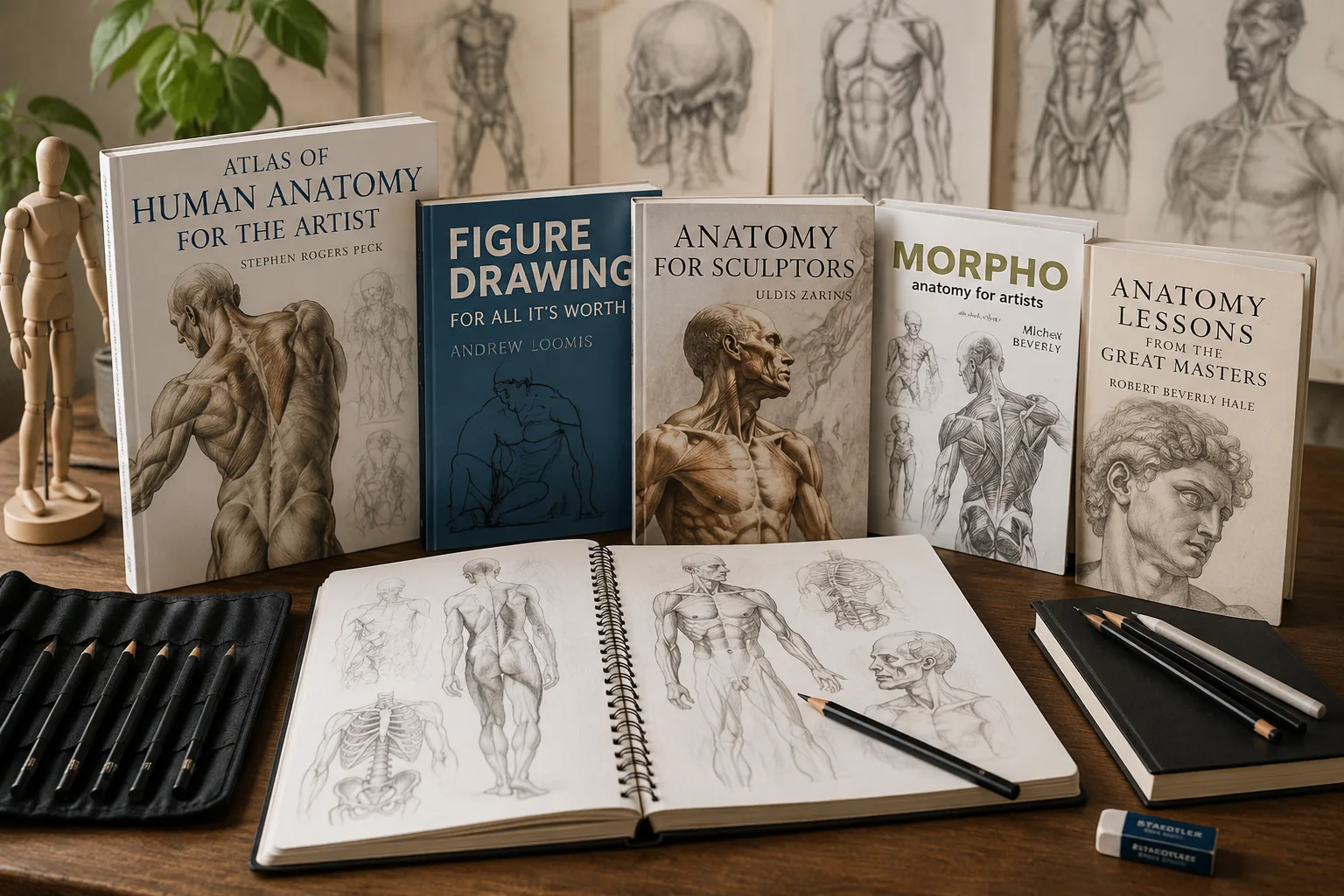
Looking for the best anatomy books for artists? Whether you're learning figure drawing, character design, sculpture, or digital painting, studying anatomy is one of the fastest ways to improve your artwork.
In this guide, we compare the best anatomy books for artists in 2026, explain who each book is best suited for, and recommend titles for beginners, intermediate artists, and professionals.
Best Anatomy Books for Artists: Quick Recommendations
Best Overall: Atlas of Human Anatomy for the Artist
Advertisement
Best Beginner Book: Figure Drawing for All It's Worth
Best for Sculptors: Anatomy for Sculptors
Best Pocket Reference: Morpho: Anatomy for Artists
Best Classic: Anatomy Lessons from the Great Masters
How We Chose These Books
A good anatomy book should do more than label muscles and bones. We evaluated each recommendation based on:
- Accuracy
- Teaching style
- Visual quality
- Practical drawing instruction
- Long-term usefulness
- Suitability for beginners
- Value for money
Our recommendations are based on artist feedback, educator recommendations, publisher information, and years of popularity within the art community.
1. Atlas of Human Anatomy for the Artist — Best Overall
Stephen Rogers Peck's classic remains one of the most respected anatomy references ever written for artists.
Instead of approaching anatomy from a medical perspective, it focuses on how muscles, bones, and body structure affect the appearance of the human figure.
Artists studying realism, illustration, comics, and concept art will continue returning to this book throughout their careers.
Pros
- Outstanding anatomical accuracy
- Excellent illustrations
- Ideal for long-term study
- Highly respected by professional artists
Cons
- Dense for complete beginners
Recommended for: Artists who want a lifetime anatomy reference.
2. Figure Drawing for All It's Worth — Best Beginner Book
Andrew Loomis has taught generations of artists how to simplify the human figure.
Rather than overwhelming readers with muscle names, Loomis explains proportion, gesture, construction, and balance in a way that's approachable for beginners.
It's still considered essential reading nearly a century after publication.
Pros
- Easy to understand
- Fantastic for beginners
- Timeless drawing instruction
Cons
- Doesn't cover anatomy in great depth
3. Anatomy for Sculptors — Best for Sculptors and Digital Artists
Despite its title, this book has become incredibly popular among digital painters, concept artists, and character designers.
Large photographs, simplified diagrams, and surface anatomy make it one of the easiest books to apply directly while drawing.
Pros
- Beautiful photography
- Excellent muscle explanations
- Great visual learning
Cons
- Expensive
4. Morpho: Anatomy for Artists — Best Pocket Reference
Michel Lauricella's Morpho series has become a favorite among modern artists.
Instead of long explanations, each page focuses on practical anatomy using simplified forms that are easy to remember while sketching.
Many artists keep Morpho next to their sketchbook because it's quick to reference during practice sessions.
Pros
- Compact
- Easy to reference
- Excellent visual diagrams
Cons
- Less detailed than larger anatomy books
5. Anatomy Lessons from the Great Masters — Best Classic
Robert Beverly Hale studies how the old masters understood anatomy.
Instead of teaching isolated muscles, he explains how artists like Michelangelo and Leonardo constructed believable human figures.
This book is particularly valuable for fine artists interested in classical drawing.
Pros
- Classical approach
- Excellent historical examples
- Great for fine artists
Cons
- Better after learning basic anatomy
Surface Anatomy vs. Medical Anatomy
One mistake many beginners make is studying anatomy the way doctors do.
Artists don't need to memorize every muscle attachment.
Instead, focus on surface anatomy—the muscles and bones that actually affect what you see when drawing a person.
Understanding landmarks like the clavicle, rib cage, pelvis, knees, elbows, and shoulder blades will improve your figure drawings far more than memorizing Latin terminology.
Affiliate Disclosure: This article contains affiliate links. If you purchase through one of these links, we may earn a small commission at no additional cost to you. Our recommendations are based on research and educational value—not affiliate commissions.
What Should Artists Look for in an Anatomy Book?
The best anatomy books balance technical accuracy with practical instruction.
When choosing your first anatomy reference, consider:
- Whether the book teaches artists instead of medical students
- Clear illustrations rather than dense text
- Figure construction techniques
- Surface anatomy
- Practical drawing demonstrations
- Quality photographs
- Progressive lessons
Many artists eventually own several anatomy books because each author explains anatomy differently.
Frequently Asked Questions
Do artists really need to study anatomy?
Yes.
Even stylized artists benefit from understanding anatomy because it improves proportions, believable poses, and character design.
Which anatomy book should beginners buy first?
For complete beginners, Figure Drawing for All It's Worth is the easiest place to start.
Once you're comfortable with proportions, Atlas of Human Anatomy for the Artist becomes an excellent long-term reference.
Is Anatomy for Sculptors worth it?
Absolutely.
Its visual approach makes complex anatomy easier to understand than many traditional textbooks, especially for digital artists.
Can I learn anatomy from YouTube?
YouTube is an excellent supplement, but books provide a structured learning path that's difficult to replicate through individual videos.
How long does it take to learn anatomy?
Most artists spend years studying anatomy.
Fortunately, you don't need to master every muscle before your drawings improve. Learning the major forms and proportions will have the biggest impact.
Why Trust The Artillerist?
At The Artillerist, we evaluate creative resources with a focus on practical learning rather than marketing claims. Our recommendations are based on educator feedback, artist experience, publisher information, and long-term popularity within the creative community.
Final Verdict
If you're only going to buy one anatomy book, Atlas of Human Anatomy for the Artist remains our strongest overall recommendation thanks to its depth, accuracy, and lasting value.
If you're just beginning your artistic journey, Figure Drawing for All It's Worth provides one of the friendliest introductions to drawing the human figure.
For artists who prefer visual learning, Anatomy for Sculptors and Morpho offer some of the clearest anatomical illustrations available today.
Remember that anatomy isn't something you learn once—it's a skill you develop over years of observation, drawing, and practice. A great anatomy book becomes a reference you'll revisit throughout your artistic career.
Related Articles
- Best Figure Drawing Books for Artists (Coming Soon)
- Best Drawing Books for Beginners (Coming Soon)
- Best Perspective Books for Artists (Coming Soon)
- Best Color Theory Books for Artists (Coming Soon)