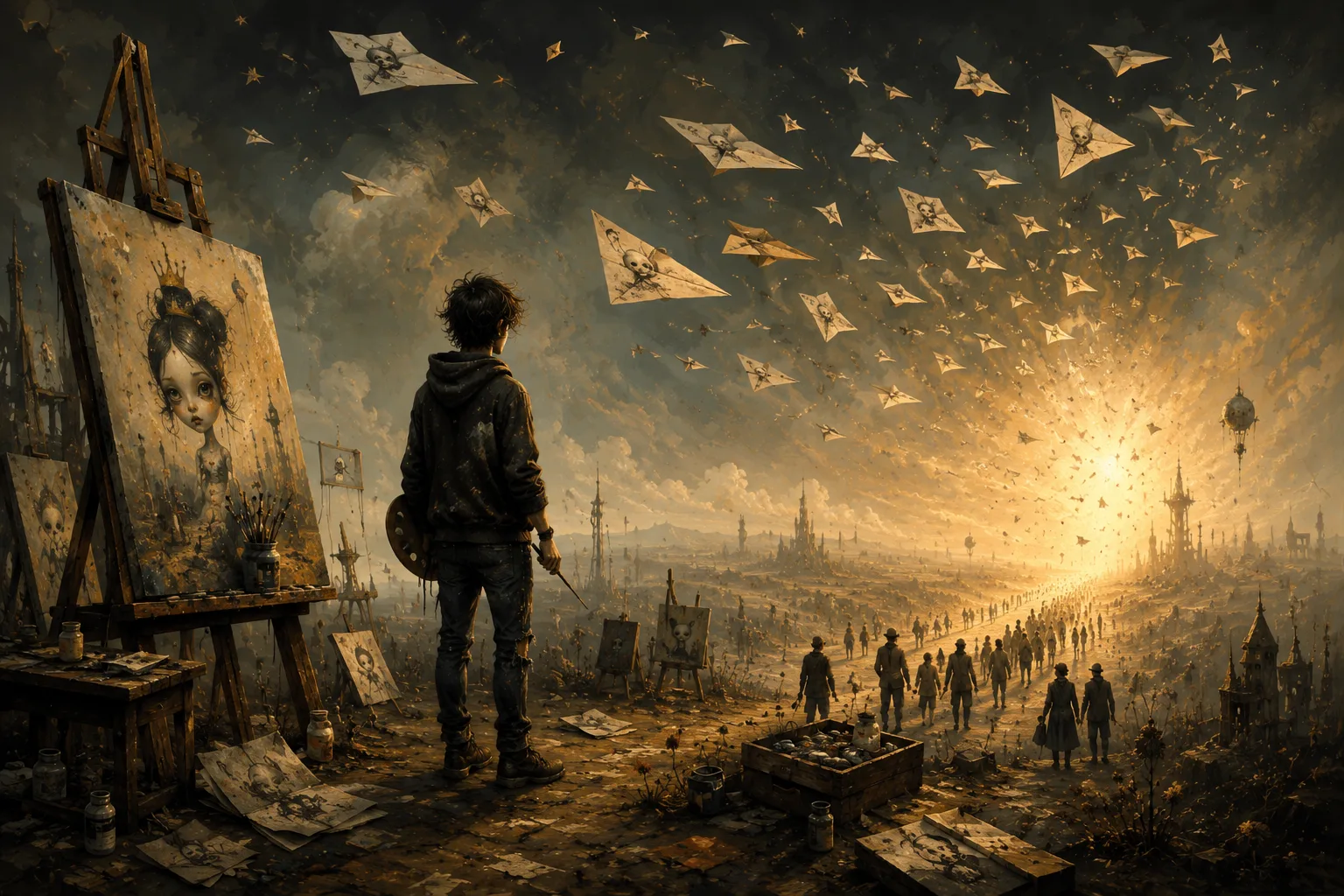
Why Great Art Isn't Enough Anymore
Why great art isn't enough anymore comes down to one simple reality: people cannot value work they never encounter.
Artistic skill still matters. Originality still matters. A meaningful body of work remains the foundation of an artist's career. But talent alone does not automatically create visibility, relationships, opportunities, or sales.
Artists also need to communicate what they make, explain why it matters, and consistently help the right audience discover it.
Advertisement
Great work gives people a reason to care. Visibility gives them the chance.
The Biggest Myth in the Art World
One of the most persistent myths in the art world is that exceptional work will naturally find its audience.
It is a comforting idea: create something extraordinary, remain patient, and recognition will eventually arrive.
The reality is less romantic.
Many successful artists spend years doing more than making art. They develop relationships, participate in exhibitions, document their process, contact galleries, maintain portfolios, attend events, and share their work repeatedly.
Talent may open a door, but persistence, communication, and professional relationships often determine whether that door leads anywhere.
Waiting to be discovered is rarely a complete career strategy. In many cases, it is simply waiting.
Does Great Art Really Sell Itself?
No. Great art can inspire someone once they see it, but it cannot introduce itself, explain its story, locate the right collector, or follow up on an opportunity.
The internet has made publishing artwork easier than ever. It has also created an overwhelming amount of competition for attention.
An artist who only creates may produce stronger work than an artist who actively promotes. However, the artist who combines good work with consistent communication is often easier to discover, remember, recommend, and support.
Consider the difference:
- Artist A creates excellent work but rarely shares it.
- Artist B creates strong work, publishes regularly, explains the process, maintains a website, and builds relationships.
- Artist A may have greater technical skill.
- Artist B gives more people an opportunity to develop a connection.
This does not mean promotion matters more than quality. It means quality and visibility perform different jobs.
Your Story Is Part of the Artwork
Collectors do not only buy physical objects. They often respond to ideas, personalities, experiences, and perspectives.
People want to understand:
- What inspired the work?
- What ideas connect one piece to another?
- Why did the artist choose this subject?
- What challenges shaped the process?
- What does the artist hope the viewer experiences?
Sharing these details gives the artwork context without dictating what viewers must feel.
Your story can transform a collection of individual pieces into a recognizable body of work. It helps people understand not only what you created, but why you were the person who needed to create it.
How Can Artists Become Easier to Discover?
Artists do not need to become full-time marketers. They need a sustainable system for making their work visible.
A practical approach might include:
- Create consistently. Develop enough work for people to recognize recurring ideas, techniques, and visual themes.
- Document the process. Photograph sketches, experiments, tools, revisions, and completed pieces.
- Publish on a dependable schedule. Consistency makes it easier for an audience to remember and follow your work.
- Build an email list. Social followers can disappear when platforms or algorithms change.
- Maintain your own website. Give your artwork a permanent home that you control.
- Participate in a community. Genuine relationships often lead to exhibitions, referrals, collaborations, and introductions.
- Make the next step obvious. Tell visitors whether they can purchase work, join a mailing list, request a commission, or attend an exhibition.
These actions do not replace artistic development. They create more opportunities for the work to reach people who may appreciate it.
Consistency Beats Waiting for Inspiration
Many artists wait until inspiration arrives before beginning a new project.
Working artists learn how to begin without it.
A consistent creative practice builds technical ability, strengthens decision-making, and creates a larger body of work from which stronger pieces can emerge.
Some experiments will fail. Others will reveal ideas you would never have discovered through planning alone.
A finished imperfect piece often teaches more than an idealized project that remains unfinished.
Consistency also builds trust with an audience. When people see that an artist continues exploring, publishing, and improving, they have more reasons to return.
Share Before Everything Feels Perfect
Perfectionism can disguise itself as professionalism.
Artists may delay sharing because a piece does not feel complete, the photograph is not perfect, or the presentation does not yet match the image in their mind.
But audiences often enjoy seeing:
- Preliminary sketches
- Rejected compositions
- Color studies
- Studio mistakes
- Experiments that changed direction
- Before-and-after comparisons
- Lessons learned during production
Sharing unfinished work does not mean publishing everything. It means recognizing that the creative process can be valuable content in its own right.
Progress creates connection because it shows that creativity is a practice rather than magic.
Build a Home You Control
Social platforms are useful for discovery, but they should not be the only place your work exists.
Algorithms change. Accounts can be restricted. Platforms lose popularity. Followers do not automatically become customers, collectors, or long-term supporters.
Your website can function as your permanent gallery and central archive.
It can contain:
- Your strongest portfolio pieces
- An artist statement
- Your biography
- Available artwork
- Exhibition information
- Interviews and articles
- A commission form
- An email signup
- Contact information
Artists should treat their website as their studio on the internet. Social media, search engines, exhibitions, and interviews can all serve as invitations back to that space.
Community Is More Powerful Than Competition
Art careers rarely grow in isolation.
Artists introduce one another to galleries, recommend vendors, share exhibition opportunities, exchange techniques, and connect collectors with work they may appreciate.
Supporting another artist does not reduce the value of your own work.
Strong creative communities grow because their members contribute rather than merely compete. A sincere recommendation can produce more trust than aggressive self-promotion because it demonstrates generosity and awareness beyond your own portfolio.
Research organizations such as the National Endowment for the Arts also examine how artists, audiences, organizations, and communities participate in the broader arts ecosystem.
The practical lesson is simple: relationships matter.
What Matters More: Talent or Visibility?
Neither one is sufficient by itself.
Talent without visibility may remain unknown. Visibility without substance may attract temporary attention but struggle to build lasting respect.
A sustainable artistic career usually requires a combination of:
- Distinctive work
- Continued improvement
- Clear communication
- Professional reliability
- Consistent visibility
- Genuine relationships
- Patience
The goal is not to become louder than every other artist. It is to make it easier for the right people to understand, remember, and return to your work.
Keep Making the Work
Recognition may come slowly. It may arrive unexpectedly. It may also look different from what you originally imagined.
You cannot control every gallery decision, algorithm, review, sale, or opportunity.
You can control whether you continue creating.
Every sketch, painting, illustration, sculpture, and experiment becomes another step toward developing the artist you hope to become.
The artists we admire are rarely defined by one isolated piece. They are defined by their willingness to keep making the next one.
Frequently Asked Questions
Can a talented artist succeed without social media?
Yes, but the artist still needs another method of reaching people. That could include galleries, exhibitions, email, referrals, search traffic, publications, workshops, or an established local community.
How often should an artist share new work?
Choose a schedule you can maintain without harming the work itself. Sharing one useful update every week is often more sustainable than publishing daily for a month and then disappearing.
Does promoting art make it less authentic?
Not when the promotion honestly reflects the work. Explaining your process, documenting your development, and helping interested people find your portfolio does not require changing your artistic voice.
Should every artist have a website?
A website is strongly recommended because it provides a stable location for your portfolio, biography, contact information, and available work. Unlike a social profile, it is a platform you control.
Final Thoughts
Why great art isn't enough anymore is not a criticism of art or talent. It is a recognition that creating meaningful work and helping people discover it are two separate responsibilities.
The goal is not merely to be discovered.
The goal is to build work, relationships, and a presence that become increasingly difficult to overlook.
Create consistently. Tell the truth about your process. Support other artists. Build a home you control. Give people a clear way to remain connected.
Your audience may already be out there.
Do not wait silently for them to find you. Give them a reason to keep coming back.